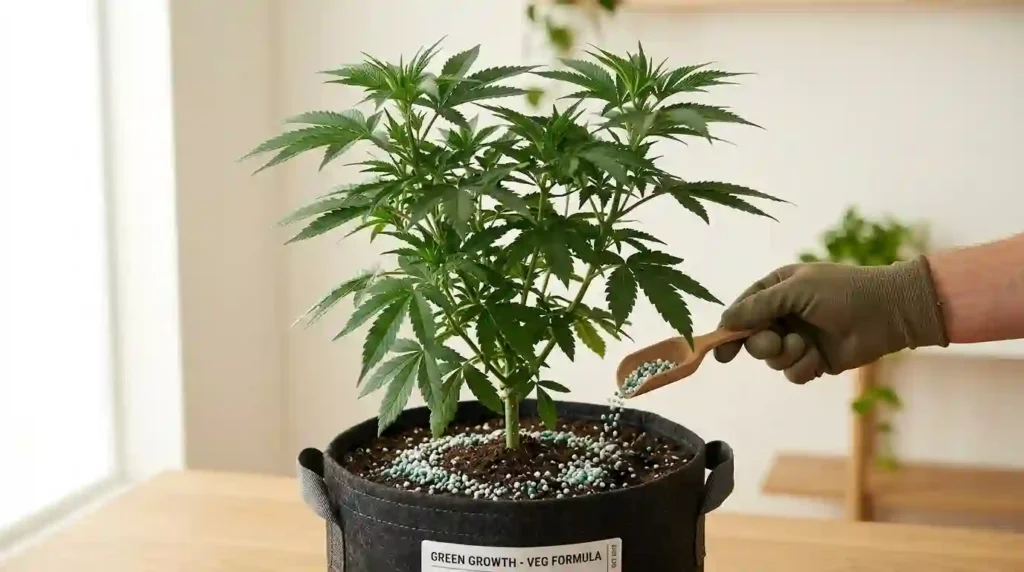
If you have ever grown tomatoes, herbs, or houseplants, you already know that plants are hungry. They need more than just water and sunlight to thrive. Cannabis plants are no different. In fact, they are among the more nutrient-hungry plants you can grow, and getting their feeding right makes a huge difference between a struggling plant and a healthy, vigorous one.
This guide is written for people who are curious about cannabis horticulture from an educational standpoint. Whether you are a beginner grower, a student of plant science, or simply someone who wants to understand how plant nutrition works, this article will walk you through the basics clearly and practically.
Why Plant Food Matters for Cannabis
Think of plant food the same way you think about a balanced diet for humans. You can survive on just bread and water, technically. But you will not feel great, grow properly, or perform at your best. Plants work the same way.
Cannabis plants need a specific mix of nutrients at different points in their life cycle. Give them too little and they struggle. Give them too much and you can actually burn or damage the roots. Finding that balance is what separates a mediocre grow from a genuinely healthy one.
The term “plant food” and “fertilizer” are often used interchangeably. At their core, both refer to substances that supply essential nutrients to plants. Some come from natural, organic sources. Others are synthetic, meaning they are manufactured in a lab. Both can work well when used correctly.
The Three Core Nutrients (And Why They Matter)
Before we talk about specific products or feeding schedules, you need to understand the foundation of plant nutrition. There are three primary nutrients that every fertilizer will list on its label, usually shown as three numbers like 10-5-5 or 3-1-2. These are known as NPK.
Nitrogen (N) is the first number. Nitrogen is responsible for leafy, green growth. It powers the vegetative stage of the plant’s life, when it is putting on size and building its structure. Think of nitrogen like protein for the plant. Without enough of it, leaves turn yellow and growth slows down noticeably.
Phosphorus (P) is the middle number. Phosphorus plays a critical role in root development and, later, in supporting the flowering stage. When a cannabis plant transitions from growing leaves to producing flowers, its phosphorus demand increases. A lack of phosphorus often shows up as purple or dark discoloration on leaves and stems.
Potassium (K) is the third number. Potassium is a bit like the plant’s immune system and logistics manager. It helps regulate water movement within the plant, strengthens cell walls, and supports overall health and resilience. Low potassium can make plants more susceptible to stress, disease, and environmental fluctuations.
Beyond these three, cannabis also needs secondary nutrients like calcium, magnesium, and sulfur, plus trace amounts of micronutrients such as iron, zinc, and manganese. These are needed in much smaller quantities but are still essential for healthy growth.
Organic vs. Synthetic Fertilizers: What Is the Difference?
This is one of the most common questions beginner growers ask, and for good reason. The choice between organic and synthetic fertilizers affects not just how you feed your plants, but how your entire growing system works.
Organic fertilizers come from natural sources. Common examples include compost, worm castings, bat guano, fish meal, kelp meal, and bone meal. These materials release nutrients slowly as they break down in the soil. They feed the microbial ecosystem in your growing medium, which in turn makes nutrients more available to plant roots over time. The downside is that organic nutrients can be harder to dial in precisely, and they work more slowly than synthetic options.
Synthetic fertilizers are manufactured to deliver nutrients in a highly concentrated, immediately available form. They are salts that dissolve in water and are taken up directly by the roots. This gives growers much more control over exactly how much of each nutrient the plant receives, which makes it easier to adjust feeding on the fly. However, synthetic nutrients do not feed the soil ecosystem. In a growing medium without living microbes, there is less biological buffer, so mistakes like overfeeding can cause root damage more quickly.
For beginners, many experienced growers actually recommend starting with a good quality organic potting mix and gentle organic fertilizers. The soil provides a natural buffer, meaning small mistakes are less catastrophic. As you gain experience, you can experiment with more precise synthetic feeding programs.
The Growth Stages and How Feeding Changes
Cannabis plants go through distinct stages of growth, and their nutritional needs shift dramatically between stages. This is one of the most important things to understand when thinking about feeding cannabis.
Seedling stage (weeks 1 to 2): This is the most delicate period. Seedlings are tiny, and their root systems are just getting established. At this point, they need very little in the way of added fertilizer. A quality seed-starting mix often has enough nutrition to carry seedlings through this period without any additional feeding. Overfeeding at this stage is one of the most common beginner mistakes and can cause what growers call “nutrient burn.”
Vegetative stage (weeks 3 onward, depending on light schedule): Once the plant has several sets of leaves and is actively growing, it starts to demand more nutrients. This is when nitrogen becomes especially important. A fertilizer with a higher first number, such as something with an NPK ratio like 3-1-2, supports rapid green growth during this phase. Watering frequency and feeding frequency both increase as the plant grows larger.
Flowering stage: When the plant transitions to producing flowers, its nutritional needs shift significantly. Nitrogen demand drops. Phosphorus and potassium demand increases. This is why many fertilizer brands sell separate “bloom” or “flower” formulas that have lower nitrogen and higher phosphorus and potassium. Using a vegetative formula during flowering, or vice versa, can throw the plant off balance.
Flush period (end of flowering): Many growers practice flushing their plants with plain water toward the end of the flowering stage. The idea is to clear any accumulated nutrient salts from the growing medium. Whether or not flushing makes a meaningful difference is a topic of ongoing debate among growers, but the practice is widely used.
A Practical Beginner Feeding Approach, Step by Step
Here is a simple framework for someone just starting out with feeding cannabis plants in soil. This is not a one-size-fits-all prescription, but it gives you a solid foundation to build from.
Step 1: Start with quality soil. Use a reputable potting mix that already contains some slow-release nutrients. Many cannabis-specific soil mixes are available and are formulated to support healthy root development and early growth. A good base medium does a lot of the heavy lifting on its own.
Step 2: Wait before feeding. If your soil already contains nutrients, wait until the plant shows signs that it is ready for more. This usually happens around weeks 3 to 4 for most seedlings. Look for slightly lighter green leaves as a gentle signal that the plant could use a nitrogen boost.
Step 3: Start at a low dose. Whatever feeding product you use, start at half the recommended dose on the label, or even lower. This gives you room to increase if the plant responds well and reduces the risk of overfeeding.
Step 4: Feed on a schedule, but watch the plant. Most growers feed every second or third watering rather than every time they water. But the real guide is always the plant itself. Learn to read the leaves. Yellowing from the bottom up often signals nitrogen deficiency. Dark, almost blue-green leaves sometimes signal too much nitrogen. The plant tells you a lot if you pay attention.
Step 5: Adjust as you enter flowering. When your plant begins to show the first signs of flowering, start transitioning to a lower nitrogen, higher phosphorus and potassium formula. Many growers phase this in gradually over a week or two rather than switching abruptly.
Step 6: Keep records. Write down what you feed, how much, and how the plant responds. This makes it much easier to troubleshoot problems and repeat successes in future grows.
Pro Tips From Experience
Here are a few insights that tend to separate growers who struggle from those who consistently get good results.
Check your pH. This is perhaps the single most overlooked factor by beginners. Even if you are providing the perfect nutrients, if the pH of your water or growing medium is off, the plant cannot absorb those nutrients effectively. This is called nutrient lockout. In soil, the ideal pH range for cannabis is generally between 6.0 and 7.0, with most growers targeting around 6.5. A simple pH meter is a very worthwhile investment.
Less is more, especially at first. The temptation to feed more when a plant looks unhealthy is understandable, but nutrient burn looks remarkably similar to nutrient deficiency in some cases. When in doubt, start by checking and correcting your pH before adding more fertilizer.
Calcium and magnesium are often the missing piece. Many growers using RO (reverse osmosis) water or growing in coco coir find that their plants develop what looks like spotty, mottled leaves. This is frequently a calcium-magnesium deficiency rather than a nitrogen or phosphorus issue. A “cal-mag” supplement is a common addition to many feeding programs for this reason.
Compost tea is underrated. For organic growers, brewing a simple aerated compost tea and watering plants with it is one of the most effective and inexpensive ways to boost soil biology and deliver a broad spectrum of micronutrients.
Do not chase perfection. Plants are resilient. A small nutrient issue, caught early and corrected, rarely causes lasting harm. Panicking and dramatically changing your feeding program every time you see a slightly off leaf does more damage than the original problem.
Common Beginner Mistakes
Since we are talking about building good habits, it is worth naming the mistakes that trip people up most often.
Overwatering combined with overfeeding is the most common combination that kills plants. When the soil is always wet and full of salt-based nutrients, roots cannot breathe and cannot function properly. Always let the growing medium dry out somewhat between waterings.
Using the wrong NPK ratio for the growth stage. Feeding a high-nitrogen formula during flowering, for instance, can delay or disrupt flower development.
Ignoring the label. Fertilizer labels exist for a reason. Always read them, and always start below the recommended dose until you understand how your plants respond.
Not flushing the medium occasionally. Nutrient salts can build up over time in soil or other growing media. Occasionally watering with plain, pH-adjusted water helps prevent lockout and keeps the medium healthy.
Important Considerations
Cannabis cultivation is subject to widely varying legal frameworks around the world. In some places, home cultivation is legal and regulated. In others, it is entirely prohibited. This article does not advocate for growing cannabis in any jurisdiction where it is not permitted. Always research and understand the laws that apply to your specific location before engaging in any cultivation activity.
Additionally, fertilizers and plant nutrients, even organic ones, should be stored safely and kept out of reach of children. Some liquid fertilizer concentrates can be harmful if ingested. Always follow safety guidelines on product labels.
Frequently Asked Questions
What NPK ratio is best for feeding cannabis during the vegetative stage?
During vegetative growth, cannabis plants benefit from a higher nitrogen formula. An NPK ratio with a higher first number, such as 3-1-2 or similar, supports leafy green growth. Look for fertilizers marketed as “grow” or “vegetative” formulas, as these are specifically balanced for this stage.
Can I use general garden fertilizer for cannabis plants?
General garden fertilizers can work in a pinch, but they are not ideal. Cannabis has specific nutritional demands that shift through its growth stages, and a general-purpose fertilizer does not allow for that kind of adjustment. Products designed for cannabis or at least for flowering plants tend to give better results, especially during the flowering stage.
How often should I feed cannabis plants?
A common approach is to feed every second or third watering rather than every time. However, this depends on the size of the plant, the growing medium, and the type of fertilizer being used. Organic slow-release fertilizers mixed into soil can reduce the need for frequent liquid feeding significantly. The best guide is always the plant itself.
What does nutrient burn look like, and how do I fix it?
Nutrient burn typically shows up as brown or crispy tips on the leaves, starting at the outermost edges. It is caused by an excess of nutrients, particularly nitrogen, in the growing medium. To address it, flush the medium with plain pH-adjusted water to dilute the salt buildup, then reduce your feeding dose going forward.
Is organic fertilizer better than synthetic for cannabis?
Neither is strictly “better” as a blanket statement. Organic fertilizers support soil biology, are more forgiving for beginners, and work more slowly. Synthetic fertilizers offer precise control and fast availability of nutrients but require more careful management. Many experienced growers use a combination of both, taking the benefits of each approach.
Final Thoughts
Feeding cannabis plants well is really just basic plant science applied to a specific and nutrient-demanding species. Once you understand the role of nitrogen, phosphorus, and potassium, the concept of growth stages, and how pH affects nutrient uptake, you have the foundation to make good decisions throughout the entire growing cycle.
Start simple. Use a quality soil, feed conservatively, and let the plant guide you. Over time, you will develop the kind of intuitive reading of your plants that comes only from hands-on observation and experience.
The goal is a healthy plant that grows through each stage as nature intended. Good nutrition is one of the most important tools you have to make that happen.
Quick Summary
- Cannabis plants need NPK (nitrogen, phosphorus, potassium) plus secondary and trace nutrients
- Nitrogen is most important during vegetative growth; phosphorus and potassium matter more during flowering
- Organic fertilizers are more forgiving for beginners; synthetics offer more precise control
- Always start with a lower feeding dose than the label recommends
- pH between 6.0 and 7.0 in soil is essential for proper nutrient uptake
- Read your plants, keep records, and adjust gradually rather than making dramatic changes
- Always follow local laws regarding cannabis cultivation
Legal disclaimer: Cannabis cultivation laws vary significantly by country, state, and region. Always check and comply with your local laws before growing any plant. This article is intended for educational purposes only.