So you have a cannabis seed in your hand and you are not quite sure what to do with it. That is a perfectly normal place to start. A lot of people dive into growing without understanding the basics, and then wonder why their seedling never breaks the soil or why it stretches and flops over within the first week.
The truth is, planting a cannabis seed is not that complicated. But like any other plant, it responds to how well you treat it from day one. Get the fundamentals right, and the plant will reward you. Get them wrong, and you will be troubleshooting from the very start.
In this guide, you will learn everything you need to know about how to plant a cannabis seed properly. We will cover germination, soil depth, seed orientation, timing, and the common beginner mistakes that quietly kill seedlings before they ever have a chance. Whether you are planting directly in soil or working with a germinated seed, this guide has you covered.
Understanding the Cannabis Seed Before You Plant
Before you put anything in the ground, it helps to understand what a cannabis seed actually is and what it needs to wake up.
A cannabis seed contains a tiny embryonic plant packed inside a hard outer shell. That shell protects the seed from damage, but it also means the seed needs moisture, warmth, and a little darkness to crack open. Think of it like a sleeping plant waiting for the right signal to grow.
Healthy seeds are generally dark brown, sometimes with a tiger-stripe pattern. They feel firm when you press them gently between two fingers. Seeds that are pale green, very light, or crumble under light pressure are usually not viable. It is worth starting with good seed stock, because a poor seed will rarely produce a strong plant no matter how carefully you plant it.
When to Plant Cannabis Seeds
Timing matters more than most beginners realize.
If you are growing outdoors, the general rule is to plant cannabis seeds after the last frost of the season, when nighttime temperatures consistently stay above 10 degrees Celsius (50 degrees Fahrenheit). In most temperate climates, this means planting sometime between late April and early June.
Cannabis is a warm-season plant. It loves long days and gentle warmth. Planting too early in cold, wet soil can cause seeds to rot before they ever germinate. Planting too late shortens the vegetative growth window and can affect the overall yield.
If you are growing indoors, timing is more flexible since you control the environment. You can start seeds at any time of year indoors, as long as you have the right light, temperature, and humidity in place.
A good benchmark to follow: soil temperature between 20 and 25 degrees Celsius (68 to 77 degrees Fahrenheit) is the sweet spot for seed germination. At this range, a healthy seed will typically crack open and send out a root within two to five days.
Step-by-Step Guide: How to Plant Cannabis Seeds in Soil
This is the section most beginners are looking for. Here is a clear, practical walkthrough from start to finish.
Step 1: Choose the Right Soil
Cannabis seedlings are sensitive. They need a light, airy growing medium that drains well but retains just enough moisture to keep the root zone from drying out too quickly.
Avoid heavy clay soils or potting mixes packed with slow-release fertilizers. A high-nitrogen starter mix can actually burn tender seedlings. The best starting medium is a light, slightly amended mix with a pH between 6.0 and 7.0. Many growers use a basic seedling mix or a lightly amended coco-perlite blend for the first few weeks.
Step 2: Prepare Your Container or Planting Spot
If planting in a pot, use a small container to start, somewhere around 100 to 250 ml (a solo cup works well). Small containers prevent overwatering because the root zone fills the space faster, which means less waterlogged soil sitting around undisturbed.
Make sure your container has drainage holes at the bottom. Standing water around the root zone is one of the fastest ways to kill a young seedling.
If planting directly outdoors in the ground, loosen the soil in a small area, mix in some perlite if it is compacted, and make sure the spot gets direct sunlight for most of the day.
Step 3: Know How Deep to Plant Cannabis Seeds
This is one of the most frequently asked questions, and the answer is simple.
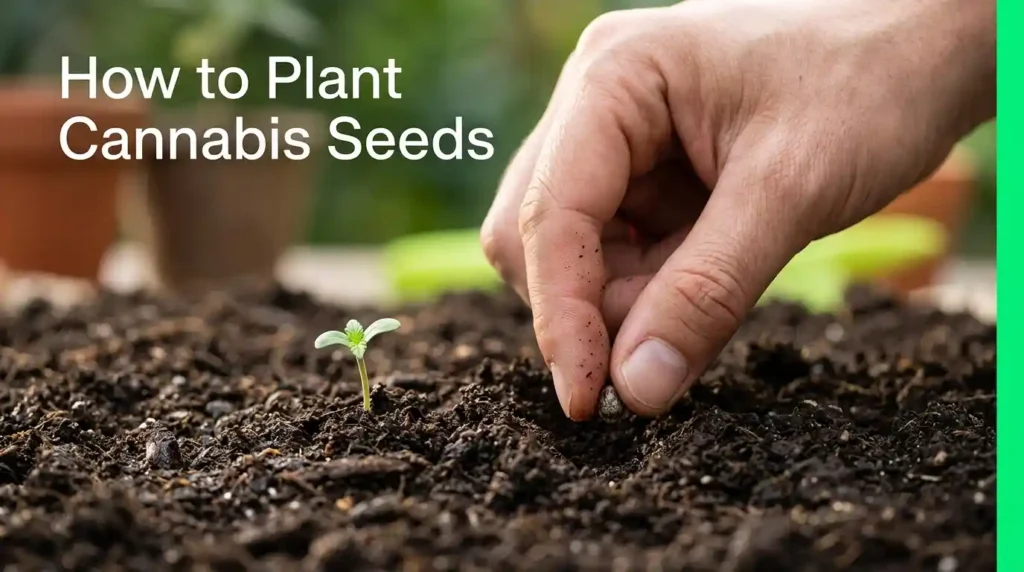
Plant cannabis seeds approximately half an inch to one inch deep (1.2 to 2.5 centimeters). That is it. Do not go deeper. A seed buried too deeply will exhaust its stored energy before the seedling can push through the soil surface.
Think of it the way you would plant a pea or a bean. You want the seed close enough to the surface that the emerging shoot does not have to travel far, but deep enough that it is covered and protected from drying out.
Step 4: Which Side of the Cannabis Seed Goes Down?
This question trips up a lot of people. Here is the short answer: it does not matter as much as you might think, but if you want to be precise, place the seed with the pointed tip facing down and the rounded end facing up.
Here is the reason. The root (called the radicle) typically emerges from the pointed end of the seed. When you plant with the tip pointing down, the root can immediately begin heading downward toward the soil without having to curve around. The shoot then pushes up from the rounded end.
That said, seeds are remarkably good at figuring out which way is up. If you plant a seed sideways or with the tip facing up, it will usually self-correct within a few days as the root reorients itself using gravity. So do not stress over this too much. Getting the depth right and keeping moisture consistent matters more.
Step 5: Moisten the Soil Before Planting
Lightly moisten your soil before placing the seed. You want the medium damp but not soaking wet. Squeeze a handful of soil in your fist. If a few drops of water drip out, it is too wet. If the clump holds its shape and barely releases any moisture, you are in the right range.
Pre-moistening the soil means you will not need to water heavily immediately after planting, which reduces the risk of washing the seed deeper than intended or creating air pockets around it.
Step 6: Place the Seed and Cover It
Make a small hole in the center of your prepared soil using a pencil or your fingertip. Drop the seed in with the pointed end facing down. Gently cover it with loose soil. Do not compact or press the soil down hard. The seedling needs to be able to push through that surface layer, and compacted soil makes that much harder.
Step 7: Keep It Warm and Consistently Moist
Place your planted seed somewhere warm. A consistent temperature between 20 and 25 degrees Celsius is ideal. You can use a propagation tray with a humidity dome to hold in warmth and moisture, or simply cover the pot loosely with a clear plastic bag.
Do not let the surface dry out completely, but also avoid drowning it. Check the surface every 12 to 24 hours and mist lightly if it starts to look dry.
Most healthy seeds in good conditions will sprout and break the surface within three to seven days.
How to Plant a Germinated Cannabis Seed
If you have already germinated your seed using the paper towel method or a glass of water and are now seeing a small white root (the taproot) emerging, you are ready to transplant it into soil.
This step requires a gentle touch. The taproot is delicate and can be damaged easily.
Here is how to do it correctly:
Use a clean toothpick or tweezers to handle the seed. Do not touch the taproot directly with your fingers if you can avoid it. Make a small hole in your moist soil about half an inch deep. Lower the germinated seed into the hole with the taproot pointing downward. Gently cover it with loose soil.
The taproot will continue to grow downward, and within a day or two you should see the seed’s shell pushing through the surface. Shortly after, the first pair of embryonic leaves (called cotyledons) will appear.
Once the cotyledons open up and begin to flatten out, your plant has officially entered the seedling stage. This is a milestone worth paying attention to because it means your plant has begun photosynthesizing on its own.
Pro Tips and Common Beginner Mistakes
Here is the part most growing guides skip. These are the real-world lessons that come from experience.
Overwatering is the number one seedling killer. New growers often water on a schedule rather than watering based on what the plant needs. Check the soil moisture by sticking your finger an inch into the surface. If it still feels damp, wait another day.
Do not plant seeds in nutrient-rich soil right away. Seeds contain enough stored energy to get started. Heavy fertilizer at the seedling stage often burns the roots and stunts growth. Use a light, gentle mix for the first two to three weeks.
Avoid putting seedlings under intense light immediately. A seedling in its first week does not need a powerful grow light or full direct sun for twelve hours. Start with gentler light and gradually increase intensity over time.
Do not disturb the seed after planting. Some beginners dig up the seed to check on it after a couple of days. This interrupts the germination process and can damage the taproot. Be patient.
Temperature swings cause stress. If the growing space gets too cold at night or too hot during the day, germination will be slow or inconsistent. Keep things stable.
Important Considerations
Growing cannabis, like growing any plant, involves responsibilities beyond just the act of planting.
Understand your local laws. In many regions, cannabis cultivation for personal use has been decriminalized or legalized under specific conditions. In other places, it remains strictly prohibited. Before growing anything, research the laws that apply specifically to your location. This article does not advocate for any illegal activity.
Practice water and resource management. Cannabis plants, especially during later growth stages, are heavy water consumers. Plan accordingly.
Pest and disease prevention starts early. Keep your growing area clean. Inspect leaves regularly. Good airflow helps prevent mold and mildew, especially during humid conditions.
Think about your environment. Outdoor growing affects the local ecosystem in ways that indoor growing does not. Planting responsibly means being thoughtful about your surroundings.
Frequently Asked Questions
How deep should I plant a cannabis seed?
Plant your cannabis seed approximately half an inch to one inch deep in the soil. Planting deeper than one inch makes it harder for the seedling to break the surface and can waste the seed’s stored energy.
Which side of the cannabis seed goes down when planting?
Ideally, the pointed end of the seed should face downward. This is where the taproot typically emerges. However, seeds are naturally capable of self-orienting, so if you are unsure, placing the seed on its side is also fine.
How long does a cannabis seed take to sprout after planting?
In warm, moist soil between 20 and 25 degrees Celsius, most healthy cannabis seeds will sprout within three to seven days. Poor germination conditions such as cold soil or inconsistent moisture can stretch this to ten days or more.
Can I plant a germinated cannabis seed directly in soil?
Yes, and this is actually a popular approach. Once the taproot is visible (around two to five millimeters long), you can carefully transfer the seed into moist soil, taproot pointing down, at a depth of about half an inch. Handle it gently to avoid breaking the root.
When is the best time of year to plant cannabis seeds outdoors?
In most climates, late spring is the best window, generally from late April through early June in the Northern Hemisphere. The key conditions to look for are stable nighttime temperatures above 10 degrees Celsius and increasing daily sunlight hours.
Final Thoughts
Planting a cannabis seed is not a mysterious process. It follows the same basic logic as planting any other seed: give it warmth, moisture, the right depth, and a little patience. The plant will do the rest.
What separates a successful grow from a frustrating one is often not the seed itself, but the attention to small details early on. Getting the soil right, not overwatering, keeping temperatures stable, and handling germinated seeds gently, these are the habits that set a healthy seedling up for strong development.
If you are new to this, do not get discouraged by early setbacks. Every experienced grower has lost a seedling or two. The learning curve is part of the process. Start simple, observe closely, and build your knowledge from there.
This guide was designed to give you factual, practical, and responsible information about how to plant cannabis seeds. Whatever your reason for learning, understanding how plants grow is always worthwhile.
Legal Disclaimer: Cannabis cultivation laws vary widely by country, state, and region. This article is written purely for educational and informational purposes. Always check your local laws and regulations before attempting to grow any plant species that may be restricted in your area. The information here is intended for readers in jurisdictions where such activity is legal and permitted.