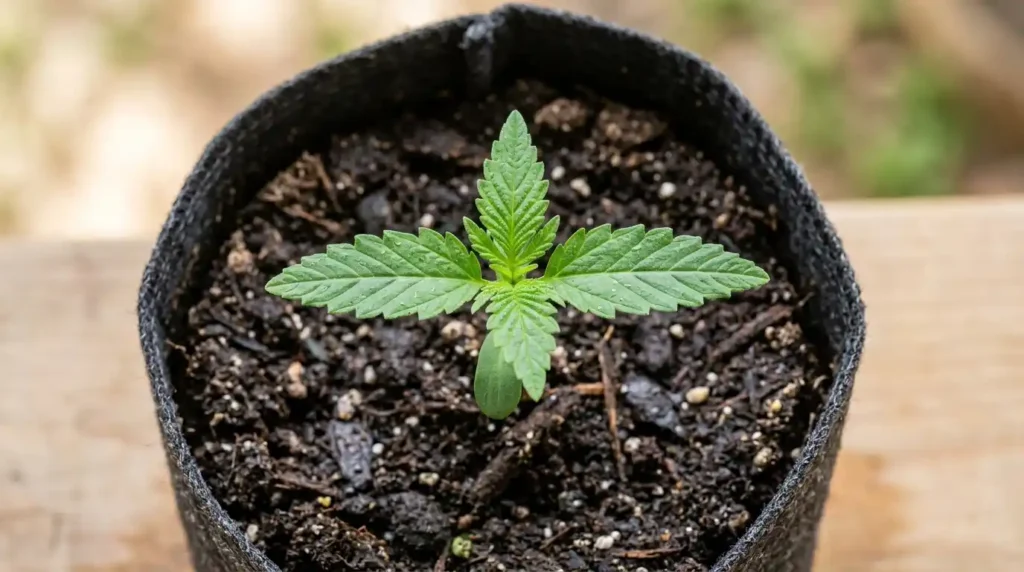
Growing cannabis indoors gives you more control over the environment than outdoor growing. Instead of depending entirely on weather and seasonal conditions, an indoor setup allows you to manage factors such as lighting, temperature, humidity, airflow, and growing space.
This beginner-friendly guide explains the fundamentals of indoor cannabis growing, from choosing a suitable space and understanding the equipment to managing the indoor environment throughout the plant’s lifecycle.
This guide focuses specifically on indoor growing. For a broader overview of growing cannabis at home, see our How to Grow Cannabis at Home.
Why Grow Cannabis Indoors?
Indoor growing is mainly about environmental control.
Outdoor plants are exposed to changing weather, seasonal daylight, temperature fluctuations, and other environmental variables. An indoor setup gives the grower more control over many of these factors.
Some potential advantages of indoor growing include:
- Greater control over lighting
- More consistent temperature and humidity
- Reduced exposure to unpredictable weather
- The ability to grow independent of outdoor seasons
- More control over the growing environment
- Greater privacy when cultivation is legally permitted
The trade-off is that indoor growing generally requires more planning, equipment, electricity, and environmental management.
What Does an Indoor Cannabis Grow Need?
Before starting, it helps to understand the main components of an indoor growing environment.
A basic indoor setup may include:
- A suitable growing space or tent
- Appropriate grow lighting
- Containers with adequate drainage
- A suitable growing medium
- Air circulation
- Temperature and humidity monitoring
- Water and appropriate plant nutrition
- A timer for managing lighting
- Equipment appropriate for ventilation and environmental control
The exact setup depends on the size of the space, growing method, plant genetics, and local requirements.
The goal is not to build the most complicated setup possible. A simple environment that you can consistently monitor is often easier for a beginner to understand.
Step 1: Choose Your Indoor Growing Space
The first practical decision is where the plants will be grown.
Common indoor options include:
- A dedicated grow tent
- A suitable room
- A closet or other enclosed growing area
Your chosen space should allow you to manage the environment and access the plants easily.
Consider:
- Available floor space
- Access to electricity
- Ventilation
- Temperature control
- Humidity management
- Cleanliness
- Privacy
- Safe access around the plants
The space should also be kept away from children and pets.
For beginners, a smaller and manageable growing area can be easier to monitor than a large setup.
Step 2: Understand Indoor Lighting
Lighting is one of the most important differences between indoor and outdoor growing.
Outdoor plants receive natural sunlight. Indoor plants depend on artificial lighting.
Common indoor grow-light technologies include:
LED Grow Lights
LEDs are widely used because modern fixtures can provide suitable light while producing relatively manageable amounts of heat.
They are available in many sizes and configurations, making them suitable for different growing spaces.
Other Lighting Technologies
Other systems, such as HID lighting, have also been used for indoor cultivation.
The important consideration is not simply the type of light, but whether the fixture is appropriate for the size of your growing area and can provide consistent illumination without creating excessive heat.
Step 3: Manage Airflow and Ventilation
Indoor plants need an appropriate supply of fresh air and good air movement.
There are two related concepts to understand:
Air circulation moves air around the growing space.
Ventilation helps exchange stale indoor air with fresh air.
Good airflow can help maintain a more stable growing environment and reduce conditions that may contribute to plant problems.
A basic indoor setup may use:
- An intake or fresh-air pathway
- An exhaust system
- An oscillating or circulation fan
- Environmental monitoring equipment
Ventilation requirements depend on the size and design of the growing space.
Step 4: Monitor Temperature and Humidity
Temperature and humidity are two of the most important environmental variables in an indoor grow.
A basic digital thermometer and hygrometer can help you monitor both.
Instead of trying to maintain one universal number throughout the entire lifecycle, remember that environmental needs can change as the plant develops.
For a deeper look at these two factors, see our Cannabis Temperature & Humidity Beginner Guide.
Stable conditions are generally more useful than constantly changing the environment in response to small fluctuations.
Step 5: Choose a Growing Medium
The growing medium provides physical support for the roots and influences water and air availability.
Common approaches include:
Soil
Soil is often considered a straightforward option for beginners because it is familiar and can be relatively forgiving.
Coco Coir
Coco coir provides a different growing environment and gives the grower more direct control over water and nutrient management.
Hydroponic Systems
Hydroponic systems grow plants without conventional soil and can require more equipment, monitoring, and technical understanding.
There is no single growing medium that is perfect for every indoor grow.
Choose a method that matches your experience level and ability to consistently manage it.
Step 6: Understand Watering in an Indoor Environment
Indoor environmental control does not eliminate basic plant-care problems.
One of the most common beginner mistakes is providing too much water.
The amount and frequency of watering depend on factors such as:
- Plant size
- Growing medium
- Container size
- Environmental conditions
- Root development
Instead of following an arbitrary watering schedule, pay attention to the condition of the growing medium and the plant.
For more information, see our guide to Overwatered vs Underwatered Cannabis.
Step 7: Understand the Indoor Growth Cycle
Indoor cannabis still follows the same broad biological progression as plants grown outdoors:
Germination → Seedling → Vegetative Growth → Flowering → Harvest
The difference is that indoor growers have greater control over the environment surrounding those stages.
Germination
The seed begins developing into a young plant.
For detailed information, see How to Germinate Cannabis Seeds.
Seedling
The young plant establishes its initial root system and begins developing leaves.
At this stage, avoiding excessive environmental stress is especially important.
Vegetative Growth
The plant develops its stems, branches, and leaves.
Indoor growers manage the environment and lighting to support healthy development.
Flowering
The plant transitions into its reproductive stage.
For photoperiod plants, the light environment plays an important role in this transition.
Harvest
Eventually, the plant reaches maturity.
Harvest timing is a separate topic that depends on plant development and maturity indicators.
See our When to Harvest Cannabis Plants guide for more information.
Step 8: Keep the Indoor Environment Consistent
One of the biggest advantages of indoor cultivation is the ability to monitor environmental conditions.
Rather than constantly changing settings, establish a stable routine for checking:
- Temperature
- Humidity
- Air movement
- Lighting
- Growing medium moisture
- General plant appearance
Keeping notes can also help you understand how the plant responds to changes.
A simple growing journal can record environmental observations, watering, feeding, and noticeable changes in plant development.
Common Indoor Growing Mistakes
Poor Ventilation
A sealed or poorly ventilated space can develop unfavorable environmental conditions.
Good air exchange and circulation are important parts of indoor environmental management.
Excessive Watering
Indoor growers sometimes assume that controlled environments require frequent watering.
The growing medium and plant condition should guide watering decisions.
Too Much Nutrient Input
Adding more nutrients does not automatically produce better growth.
Nutrient management should be based on the growing method and plant requirements.
Ignoring Temperature and Humidity
A plant can appear healthy while environmental conditions gradually become problematic.
Regular monitoring makes it easier to notice changes before they become larger problems.
Overcomplicating the Setup
More equipment does not automatically mean a better grow.
Beginners can benefit from understanding the purpose of each component before adding more technology or techniques.
Indoor Growing vs Outdoor Growing
The primary difference is environmental control.
| Factor | Indoor Growing | Outdoor Growing |
|---|---|---|
| Light | Artificial | Natural sunlight |
| Temperature control | Greater | Limited |
| Humidity control | Greater | Weather dependent |
| Weather exposure | Low | High |
| Seasonal dependence | Lower | Higher |
| Equipment needs | Usually higher | Usually lower |
| Environmental consistency | Easier to manage | More variable |
Indoor growing provides greater control, but that control comes with additional responsibility.
How to Make an Indoor Grow Easier for Beginners
You do not need to master every cultivation technique immediately.
A practical learning approach is:
1. Start with a manageable space
Avoid creating an environment that is difficult to monitor.
2. Learn your equipment
Understand what your light, fans, monitoring devices, and other equipment actually do.
3. Monitor the environment
Regularly check temperature, humidity, airflow, and plant condition.
4. Avoid unnecessary changes
Give the plant time to respond before changing several variables.
5. Learn individual topics separately
Use dedicated resources for watering, germination, plant problems, training, and harvesting.
6. Keep records
A simple journal can make troubleshooting much easier.
Frequently Asked Questions
Is indoor growing better than outdoor growing?
Not necessarily. Indoor growing offers greater environmental control, while outdoor growing can require less equipment and make use of natural sunlight.
The better option depends on your environment, available space, climate, experience, and local laws.
What is the most important part of an indoor grow?
There is no single component that determines success. Lighting, airflow, temperature, humidity, growing medium, water, and overall plant care all work together.
Do indoor plants need ventilation?
Indoor growing spaces generally benefit from appropriate air movement and ventilation. The exact requirements depend on the size and design of the growing area.
What is the easiest growing medium for an indoor beginner?
There is no universal answer, but soil is often considered a straightforward starting point because it is familiar and relatively forgiving.
How do you control temperature and humidity indoors?
Start by monitoring both with a reliable thermometer and hygrometer. If conditions move outside a suitable range, environmental controls such as ventilation or other climate-management equipment may be needed.
How long does an indoor cannabis grow take?
There is no single timeline. The total duration depends on genetics, plant development, growing conditions, and how long the vegetative period lasts.
For a broader lifecycle overview, see our Cannabis Growth Stages & Harvest Guide.
Can cannabis be grown indoors in a small space?
Indoor growing can be adapted to different spaces, but the available area still needs to provide adequate room for the plants and allow proper environmental management, ventilation, and safe access.
Final Thoughts
Growing cannabis indoors is primarily an exercise in environmental management.
The biggest advantage of an indoor setup is control: you can monitor lighting, temperature, humidity, airflow, and the growing environment more closely than you typically can outdoors.
For beginners, the best place to start is with a manageable setup and a clear understanding of the fundamentals. Learn what each part of the environment does, observe how the plant develops, and avoid making unnecessary changes.
For the complete cannabis-growing lifecycle, explore our How to Grow Cannabis: Complete Step-by-Step Guide.
Sources & Further Reading: