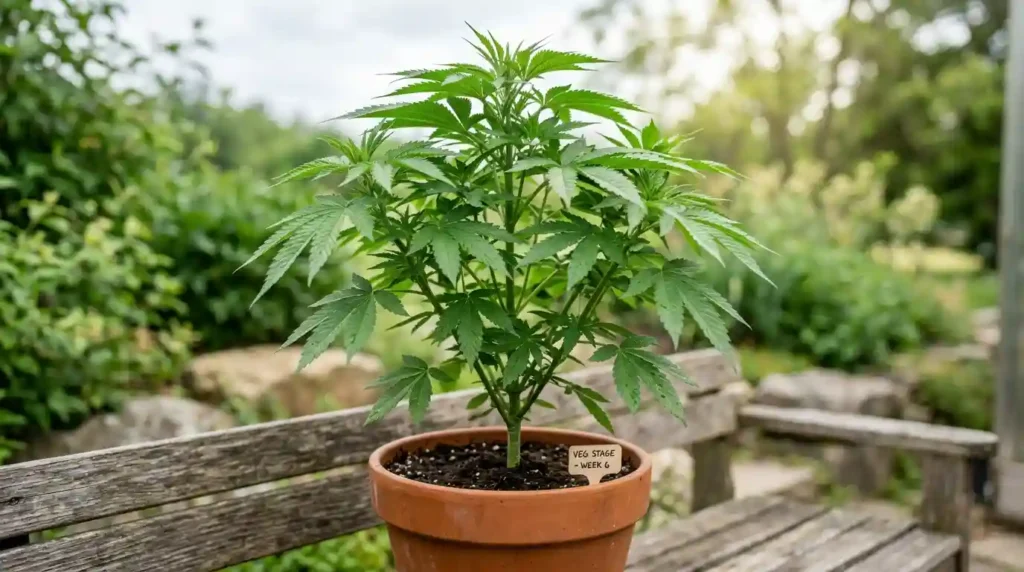
If you have ever typed “cannabis plant” into a search bar and ended up more confused than when you started, you are not alone. Between the science, the slang, the legal discussions, and the historical context, the topic can feel overwhelming fast. This guide cuts through all of that.
Here, you will get a straightforward, factual look at what a cannabis plant actually is — its biology, its different types, its growth stages, and why it matters in science, agriculture, and everyday conversation. No hype, no agenda. Just clear, honest plant science.
Whether you are a curious beginner, a hobby gardener trying to understand what you are reading, or simply someone who wants reliable information, this article is written for you.
What Is the Cannabis Plant, Exactly?
At its most basic, cannabis is a flowering plant. It belongs to the family Cannabaceae, which also includes hops — yes, the same hops used to make beer. The full scientific cannabis plant name is Cannabis sativa L., where the “L.” stands for Carl Linnaeus, the botanist who first formally classified it in 1753.
Think of cannabis the same way you would think of tomatoes. Tomatoes belong to the Solanaceae family. There are hundreds of varieties — cherry tomatoes, beefsteak, heirloom — but they all share the same basic plant biology. Cannabis works similarly. There are different varieties and subspecies, but they all share a core structure and set of characteristics.
The plant is native to Central Asia and South Asia, with evidence of human use going back thousands of years. Archaeological findings suggest cannabis was cultivated as far back as 6,000 years ago, primarily for fiber, food, and its seeds.
The Scientific Classification of Cannabis
Here is a simple breakdown of where cannabis fits in the plant world:
- Kingdom: Plantae (plants)
- Order: Rosales
- Family: Cannabaceae
- Genus: Cannabis
- Species: Cannabis sativa
Within this genus, botanists have long debated whether cannabis is one species with many varieties or several distinct species. The most widely accepted classification today recognizes three main types:
Cannabis sativa — Tall, narrow-leafed plants that typically originate from equatorial regions like Southeast Asia, Central America, and Africa.
Cannabis indica — Shorter, broader-leafed plants, originally from the Hindu Kush mountain range in South Asia.
Cannabis ruderalis — A smaller, hardy variety found in parts of Eastern Europe and Russia. It is less commonly discussed but notable because it flowers based on age rather than light cycles (more on that in the growth stages section).
It is worth noting that modern cannabis plants sold or studied today are often hybrids — combinations of two or more of these types. Pure sativa or pure indica plants are increasingly rare.
The Physical Anatomy of a Cannabis Plant
Understanding what a cannabis plant looks like from the outside is a good starting point before diving into how it grows.
The Root System
Like most plants, cannabis has an underground root system that anchors it in soil and pulls up water and nutrients. A healthy cannabis plant develops a taproot — a central, dominant root — with smaller lateral roots branching off it. Strong roots are the foundation of a healthy plant, much like the foundation of a house.
The Stem
The main stem of a cannabis plant is typically thick and fibrous. This fibrous quality is one reason cannabis (particularly industrial hemp varieties) has been used for centuries to make rope, textiles, and paper. The stem supports the weight of leaves, branches, and flowers.
The Fan Leaves
Cannabis leaves are probably the plant’s most recognizable feature. The iconic leaf has a distinctive palmate shape — meaning it radiates out from a central point like fingers on a hand. The number of leaflets per leaf can range from 1 to 13, though 5 to 9 is most common.
These large leaves are often called fan leaves. They are responsible for photosynthesis — the process by which the plant converts light, carbon dioxide, and water into energy.
The Flowers (Buds)
Cannabis is a dioecious plant, which is a botanical term meaning individual plants are typically either male or female. This is different from most common garden plants like tomatoes or roses, which have both male and female reproductive parts on the same plant.
Female cannabis plants produce flowers — commonly called “buds” — that are dense clusters of reproductive tissue. These flowers contain the highest concentration of the plant’s chemical compounds, including cannabinoids and terpenes.
Male plants produce pollen sacs, which they use to fertilize female plants. Once a female plant is pollinated, it shifts energy toward producing seeds rather than developing large flowers.
The Trichomes
If you look closely at the flowers and nearby leaves of a mature female cannabis plant, you will notice tiny, crystal-like structures coating the surface. These are trichomes — microscopic hair-like glands that produce and store most of the plant’s cannabinoids and terpenes. They are the reason mature flowers look frosty or sticky.
Think of trichomes like the essential oil glands on a lavender plant. That is where most of the aroma and active compounds are concentrated.
Key Chemical Compounds in the Cannabis Plant
The cannabis plant produces over 500 identifiable chemical compounds. Of these, two categories get the most attention: cannabinoids and terpenes.
Cannabinoids
Cannabinoids are unique to the cannabis plant. The two most well-known are:
- THC (tetrahydrocannabinol) — the compound responsible for the psychoactive effects associated with cannabis.
- CBD (cannabidiol) — a non-psychoactive cannabinoid that has attracted significant interest in medical research.
The plant also produces minor cannabinoids like CBG (cannabigerol), CBC (cannabichromene), and CBN (cannabinol), among others.
Industrial hemp — a legal variety of cannabis grown for fiber, seed, and CBD — is specifically bred to contain very low levels of THC (typically under 0.3% in the United States) and high levels of CBD.
Terpenes
Terpenes are aromatic compounds found in many plants, not just cannabis. They are what give a lemon its citrus smell, a pine tree its sharp scent, and lavender its soothing aroma. In cannabis, terpenes contribute to the plant’s distinct smell and may interact with cannabinoids in complex ways, though research in this area is still ongoing.
Cannabis Uses: A Historical and Modern Overview
Cannabis has one of the longest documented histories of human use of any plant. Understanding these uses gives helpful context for why this plant generates so much scientific and cultural interest.
Fiber and Textile Production
For most of recorded history, cannabis was primarily a fiber crop. Hemp — a term used specifically for low-THC cannabis varieties — was cultivated globally to produce rope, sailcloth, clothing, and paper. The word “canvas” itself is thought to derive from the Latin “cannabis.” Hemp fiber is notably strong and durable.
Seed and Oil
Cannabis seeds are rich in protein, healthy fats, and essential fatty acids. Hemp seed oil is pressed from the seeds and used in food products and cosmetics. Whole hemp seeds are used as a nutritional food ingredient in many parts of the world.
Traditional Medicine
Cannabis has a long history in traditional medicine across many cultures, particularly in Asia and the Middle East. Ancient Chinese medical texts, dating back thousands of years, reference cannabis preparations.
Modern Research and Medical Applications
In recent decades, scientific interest in cannabinoids — especially CBD and THC — has grown significantly. Regulatory bodies in several countries have approved specific cannabinoid-based medications for certain conditions. Ongoing clinical research continues to explore the plant’s potential in various medical contexts.
It is important to note that the medical and therapeutic applications of cannabis compounds are still being studied. This article does not make health claims and strongly encourages consulting a qualified healthcare professional for any health-related questions.
Industrial Hemp
Beyond medicine, industrial hemp is used to make biodegradable plastics, building insulation (hempcrete), paper, fuel, and more. The global hemp industry has grown considerably as more countries legalize and regulate hemp cultivation.
The Life Cycle of a Cannabis Plant
Cannabis is an annual plant, meaning it completes its entire life cycle within one growing season. Here is how that cycle unfolds:
Stage 1 — Germination (3 to 10 days)
The journey begins when a seed receives moisture, warmth, and oxygen. The seed splits and a tiny taproot emerges, pushing downward while a small sprout reaches upward toward light. Think of this stage like waking up from a very long sleep. The plant is fragile and needs gentle conditions.
Stage 2 — Seedling (2 to 3 weeks)
The seedling produces its first true leaves. Initially, these are simple single-bladed leaves. As the plant grows, it begins to develop the characteristic multi-fingered fan leaves. The seedling stage requires warmth, moderate light, and careful watering — too much water is a common mistake here.
Stage 3 — Vegetative Growth (3 to 16 weeks)
This is the growth phase. The plant is focused entirely on building mass — more stems, more leaves, more roots. During this stage, cannabis needs plenty of light (typically 16–18 hours per day for indoor cultivation), nitrogen-rich nutrients, and adequate space. An outdoor-grown cannabis plant in ideal conditions can reach heights of several meters during this phase.
Stage 4 — Flowering (8 to 11 weeks)
When the plant senses that days are getting shorter (fewer hours of light), it shifts from growing leaves to producing flowers. This is a light-triggered response in most cannabis varieties, driven by something called the photoperiod. The exception is Cannabis ruderalis and autoflowering hybrids, which flower based on age rather than light changes.
During this stage, female plants develop flowers and male plants develop pollen sacs. Growers who want to produce seeds allow fertilization. Those focused on flower production typically remove or avoid male plants to prevent pollination.
Stage 5 — Harvest and Seed Production
At maturity, flowers are ready for harvest (or seeds are collected if the plant was fertilized). The timing of harvest affects the chemical composition of the flowers, particularly the ratio of different cannabinoids.
Common Beginner Mistakes When Learning About Cannabis Plants
If you are studying cannabis plants for educational or hobby purposes, here are some things that trip beginners up most often:
Confusing hemp and marijuana: Both are cannabis plants, but they are legally and chemically distinct. Hemp is low in THC; marijuana refers to cannabis varieties with higher THC content. The distinction matters legally in most jurisdictions.
Assuming all cannabis is the same: The plant has enormous genetic diversity. Different varieties (often called strains or cultivars) vary significantly in their chemical profiles, growth habits, and physical characteristics.
Overwatering seedlings: Cannabis seedlings are sensitive. Beginners often water too frequently, not giving roots time to breathe. Most experienced growers say a light, infrequent watering approach works best in early stages.
Ignoring the importance of pH: Cannabis is particular about soil pH. Soil that is too acidic or alkaline limits the plant’s ability to absorb nutrients, even when those nutrients are present. A pH range of 6.0 to 7.0 in soil is generally considered optimal.
Not understanding local laws: This cannot be overstated. Cannabis laws differ enormously across countries, states, and even municipalities. What is legal in one place may carry serious legal consequences in another.
Important Considerations: Legal Awareness and Responsible Learning
Cannabis law is one of the most rapidly evolving areas of legislation in the world. Over the past decade, dozens of countries and U.S. states have changed their legal frameworks around cannabis cultivation, possession, and use. Some have legalized cannabis for medical use only. Others have moved to full adult-use legalization. Many still maintain strict prohibition.
Before engaging with cannabis plants in any capacity — whether growing, handling, or researching — you have a responsibility to understand the rules in your specific location. The laws in your city, state, and country all matter. Local ordinances can differ from state law. International travel with cannabis products is a serious legal matter.
This article is purely educational. Nothing here constitutes legal advice. When in doubt, consult a legal professional familiar with the laws in your jurisdiction.
Frequently Asked Questions
What is the official scientific cannabis plant name?
The scientific name is Cannabis sativa L. The “L.” denotes Linnaeus, who formally classified the plant in 1753. Within this classification, botanists recognize subspecies including Cannabis sativa, Cannabis indica, and Cannabis ruderalis, though debate continues about whether these represent distinct species or varieties of a single species.
What are the main cannabis uses throughout history?
Cannabis has historically been used for fiber (rope, textiles, paper), food (seeds and oil), and traditional medicine. In modern times, its uses have expanded to include pharmaceutical research, industrial hemp products (hempcrete, biodegradable plastics), nutritional supplements (hemp seed oil), and adult recreational use in places where it is legal.
What is the difference between hemp and marijuana?
Both are cannabis plants. The primary legal and chemical distinction is THC content. Hemp is typically defined as cannabis with less than 0.3% THC (in the U.S.) and is legal for cultivation in many places. Marijuana refers to cannabis varieties with higher THC content and is subject to stricter regulations in most jurisdictions.
Is cannabis the same as a weed or is it a real plant?
Cannabis is a real, botanically classified plant. In colloquial usage, “weed” is a slang term for cannabis. The term “weed” generally refers to any plant growing where it is not wanted, and because cannabis can grow in a wide range of conditions with relative ease, it earned that informal nickname. Botanically and scientifically, it is a well-documented species with a long history of cultivation.
Can cannabis plants be male and female?
Yes. Cannabis is typically dioecious, meaning individual plants are either male or female. Female plants produce flowers (buds) and are of primary interest for cannabinoid production. Male plants produce pollen. Some cannabis plants are also hermaphroditic — they develop both male and female reproductive structures — usually as a stress response.
Final Thoughts
The cannabis plant is, at its core, a fascinating piece of botanical history. It has traveled with human civilization for thousands of years — used for fiber, food, and medicine long before it became a subject of modern legal and cultural debate.
Understanding cannabis as a plant — its structure, its chemistry, its life cycle, and its many cannabis uses — gives you a solid foundation for reading about it intelligently, whether your interest is scientific, agricultural, or simply curious.
This guide has aimed to give you accurate, grounded, and practical plant knowledge. Science respects curiosity. Approach this plant (and any plant) with a desire to understand it clearly, and you will always learn something worth knowing.
Always remember to consult your local laws before engaging with cannabis in any practical capacity. Laws vary by location and change over time.
Disclaimer: Cannabis cultivation and use laws vary widely by country, state, and region. This article is strictly educational. Always research and follow the laws in your specific location before taking any action related to cannabis plants.
This article is for educational purposes only. It does not constitute medical, legal, or cultivation advice. Always consult qualified professionals and follow local laws.