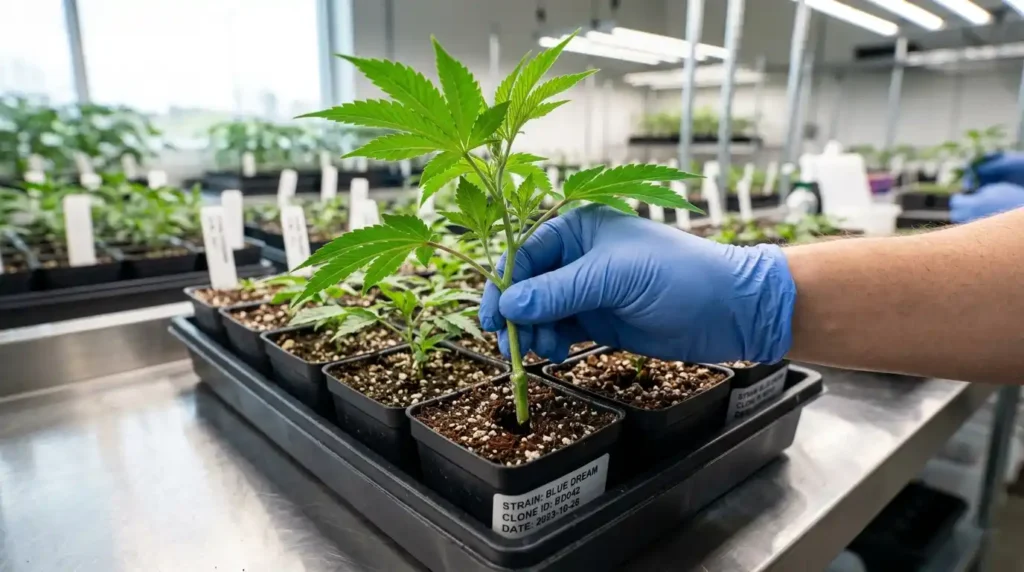
If you have ever grown tomatoes from a cutting, you already understand the basic idea behind plant cloning. You take a small piece of a healthy plant, encourage it to grow roots, and end up with a new plant that is genetically identical to the original. Cannabis plants work the same way.
Cloning cannabis plants is one of the most talked-about topics in horticulture circles, and for good reason. It is a practical, science-backed technique that hobby growers find genuinely useful once they understand the basics. Whether you are studying plant biology, exploring horticulture as a hobby, or simply curious about how this process works, this guide walks you through everything clearly and honestly.
By the end of this article, you will understand what cloning actually means in the plant world, why growers use it, what the step-by-step process looks like, and what mistakes beginners tend to make along the way.
What Does “Cloning” a Cannabis Plant Actually Mean?
Before diving into the how, it helps to understand the what.
In plant science, cloning simply means creating a genetically identical copy of a plant through vegetative propagation. Instead of growing a new plant from seed, you take a cutting from an existing plant and encourage that cutting to develop its own root system.
The resulting plant, called a clone, carries the exact same genetic material as its parent. Think of it like a photocopy. Every physical and chemical trait the parent plant has, the clone will also have. This is different from seeds, which carry genetic material from two parent plants and can produce some variation.
Cannabis plants are particularly well-suited to this technique because they root relatively easily when conditions are right. The process is similar to propagating basil, rosemary, or pothos houseplants from cuttings, which many people do without even thinking of it as “cloning.”
Why Do Growers Clone Cannabis Plants?
Understanding the reasoning behind cloning helps you appreciate the technique more fully.
Genetic consistency. When a grower finds a plant with exactly the traits they want, whether that is a particular growth structure, canopy shape, or resilience to environmental stress, cloning preserves those traits perfectly. Seeds cannot guarantee this.
Time savings. Clones skip the germination stage. A rooted clone can move into the vegetative growth phase almost immediately, saving several weeks compared to starting from seed.
Cost efficiency. Once a grower has a strong mother plant, they can take dozens of cuttings from it over its lifetime rather than purchasing new seeds each growing cycle.
Predictability. Clones behave like known quantities. If the mother plant responds well to a particular light cycle, humidity range, or nutrient schedule, her clones likely will too.
The Biology Behind Rooting a Cutting
Here is where it gets genuinely interesting from a plant science standpoint.
When you cut a branch from a cannabis plant, that cut end is capable of producing what are called adventitious roots. These are roots that grow from non-root tissue, essentially the plant’s emergency response to being separated from its parent.
The cells in the cut stem, particularly around the node regions, can dedifferentiate. That means specialized stem cells essentially “reset” and become capable of growing into a root. This process is triggered by naturally occurring plant hormones called auxins, particularly indole-3-acetic acid (IAA).
Many rooting gels and powders on the market contain synthetic versions of these auxins, such as indole-3-butyric acid (IBA), to speed this process up. When you dip a fresh cutting into a rooting gel, you are essentially giving it a concentrated dose of the signal it needs to start developing roots quickly.
Humidity plays a critical role here too. A cutting without roots cannot absorb water from the soil yet. High humidity around the leaves reduces transpiration, which is how plants lose water through their leaf surfaces. This keeps the cutting hydrated while it works on building its root system.
Step-by-Step Guide to Cloning Cannabis Plants
Step 1: Choose a Healthy Mother Plant
Your clone is only as good as its source. The mother plant should be:
- Actively growing and healthy, with no signs of nutrient deficiencies or pest damage
- In the vegetative growth stage, not flowering
- At least two months old for best results
Avoid taking clones from stressed plants. Stressed cuttings root poorly and often carry problems into the next generation.
Step 2: Gather Your Supplies
You do not need an elaborate setup to clone successfully. Here is what you will need:
- Sharp, sterile scissors or a razor blade
- Rooting hormone (gel, powder, or liquid)
- Small containers or a clone tray with a humidity dome
- Grow medium (rockwool cubes, peat pellets, or a light soil mix work well)
- Spray bottle with clean, room-temperature water
- A clean workspace
Sterilize your cutting tools before use. Rubbing alcohol or a diluted bleach solution works well. This step matters more than beginners realize. A contaminated cut can introduce bacteria or fungi that prevent rooting entirely.
Step 3: Take the Cutting
Select a branch with at least two to three nodes. A node is the junction point where a branch or leaf meets the main stem. The cutting should be roughly 10 to 15 centimeters (4 to 6 inches) long.
Using your sterilized blade, make a clean cut at a 45-degree angle. The angled cut increases the surface area of the stem, giving the rooting hormone more to work with and allowing better water uptake.
Remove any large fan leaves from the lower half of the cutting. Leave one or two small sets of leaves at the top. The reason for removing lower leaves is simple: those leaves would end up buried in your growing medium and would rot, creating disease problems.
Step 4: Apply Rooting Hormone
Immediately after taking the cutting, dip the cut end into your rooting hormone. If using gel, coat the bottom 2 to 3 centimeters thoroughly. If using powder, gently tap off any excess after dipping.
Do not delay this step. The cut end should be dipped as quickly as possible, ideally within a few seconds of making the cut. Exposed to air, the cut can dry out or oxidize, which reduces rooting success.
Step 5: Plant the Cutting
Insert the cutting into your prepared grow medium. Push it in deep enough to anchor it, about 3 to 4 centimeters. The rooting hormone should remain on the stem and not wipe off against the edge of the hole. To prevent this, use a pencil or small stick to pre-poke the hole before inserting the cutting.
Water the medium lightly before planting, so it is moist but not soaking wet. Wet roots in an overly saturated medium develop poorly.
Step 6: Create a Humid Environment
Place your cutting under a humidity dome or inside a propagation tent. You want relative humidity around 70 to 80 percent during this stage. Mist the inside of the dome once or twice daily with clean water to maintain this level.
Avoid misting the cuttings themselves heavily. The goal is ambient humidity, not wet leaves sitting in pools of water.
Step 7: Provide Gentle Light
Cuttings do not need intense light. In fact, strong grow lights can stress them. A simple fluorescent light or low-wattage LED kept at 18 to 24 inches above the tray works well. An 18-hour light, 6-hour dark cycle is commonly used for clones.
Step 8: Wait and Watch
Roots typically begin to emerge within 7 to 14 days, though some cuttings take up to 21 days. Resist the urge to pull cuttings out to check for roots. This disrupts root development and can damage fragile early root growth.
Signs that your clone is rooting successfully include new leaf growth at the top of the cutting, perky leaves that are not wilting, and eventually, white root tips visible through the container sides (if using translucent containers or rockwool cubes).
Once roots are 2 to 3 centimeters long, the clone is ready to transplant into its growing environment.
Pro Tips From Experience
Temperature matters more than most beginners think. Root zone temperature between 20 and 24 degrees Celsius (68 to 75 Fahrenheit) encourages faster, healthier rooting. Too cold and roots develop sluggishly. Too warm and you risk fungal issues.
Less is more with nutrients. Many beginners make the mistake of adding nutrients to the clone’s water or medium right away. Cuttings do not have roots yet, so they cannot absorb nutrients meaningfully. Early nutrient exposure often causes nutrient burn and stressed leaves. Plain water or a very diluted formula is all you need until roots are established.
Ventilation prevents mold. High humidity is necessary, but stagnant air inside a dome invites mold. Briefly open the dome for 10 to 15 minutes once or twice daily to allow fresh air exchange, especially as your clones approach the two-week mark.
Take more cuttings than you need. Even experienced growers do not root 100 percent of their cuttings every time. Taking 20 to 30 percent more cuttings than your target number accounts for natural losses without leaving you short.
Score the stem for better results. Some growers gently scrape the outer layer of the stem near the cut end with a blade before applying rooting hormone. This exposes more of the cambium layer, the actively growing tissue just under the outer bark, and can accelerate rooting.
Common Beginner Mistakes
Cutting from a flowering plant. A cannabis plant in the flowering stage can technically produce clones, but rooting takes longer and the clone must “re-veg,” meaning it has to transition back to vegetative growth, which adds weeks to the process. Always clone from plants in the vegetative stage.
Skipping sterilization. Dirty scissors introduce pathogens. This is one of the most common causes of clone failure and one of the easiest to avoid.
Overwatering the medium. Soggy grow medium suffocates the stem and promotes rot. Keep it moist, not wet.
Using the wrong light intensity. Bright grow lights designed for mature plants stress fresh cuttings. Soft, indirect light is enough at this stage.
Giving up too early. Some cuttings take close to three weeks to root. Many beginners discard struggling cuttings before they ever get the chance to recover.
Important Considerations
Environmental conditions are everything at this stage. Clones are fragile. They are dealing with the stress of being separated from their parent plant while simultaneously trying to grow roots. Stable temperature, controlled humidity, and clean conditions dramatically improve success rates.
Sanitation and plant health. Any pest, disease, or deficiency present in the mother plant will likely be present in the clone. This is why mother plant selection matters so much. Cloning spreads both good traits and problems with equal efficiency.
Legal awareness. Cannabis cultivation laws differ significantly across different countries, states, and provinces. In some places, home cultivation of cannabis plants is legal for adults up to a certain number of plants. In others, it is entirely prohibited. This guide is educational in nature and does not advocate for any activity that conflicts with local regulations. Always research the laws in your specific location before attempting any form of cannabis cultivation.
Frequently Asked Questions
How long does it take for cannabis clones to root?
Most cannabis cuttings develop visible roots within 7 to 14 days under good conditions. Some cuttings may take up to 21 days, especially if temperatures are lower or the mother plant was under stress. Patience is important during this stage.
Can you clone a cannabis plant from any part of it?
Technically, many parts of the plant contain the cells needed to produce roots, but branch tip cuttings with at least two nodes are the most reliable choice. These sections contain the highest concentration of actively growing tissue and root most predictably.
What is the best grow medium for rooting cannabis clones?
Rockwool cubes are very popular among experienced growers because they hold moisture well while maintaining good air pockets. Peat pellets and light soilless mixes also work well. Avoid dense, heavy soils that compact around the stem and restrict oxygen.
Do cannabis clones need nutrients right away?
No. Clones without roots cannot uptake nutrients, so adding fertilizers early is counterproductive and can cause chemical burn. Wait until the clone has a healthy root system before introducing any nutrient program.
Is it normal for clone leaves to droop or yellow slightly?
Some drooping in the first few days is completely normal. The cutting is adjusting to life without a root system and managing its water use through its leaves. Slight yellowing of lower leaves can also occur. What you want to watch for is rapid, full-plant wilting combined with no improvement after the first week, which may indicate a failed cutting.
Final Thoughts
Cloning cannabis plants is one of the more fascinating applications of basic horticultural science. At its core, it is not magic or mystery. It is a straightforward process rooted in plant biology that has been used across horticulture for generations, applied to herbs, fruits, houseplants, and commercial crops around the world.
For anyone interested in plant science, the process of taking a simple cutting, coaxing it to grow roots, and watching it develop into a full, healthy plant is genuinely rewarding. The principles involved, adventitious rooting, the role of plant hormones, the importance of environment and sanitation, apply broadly across the plant world and give you a deeper appreciation for how plants grow and adapt.
The key takeaways from this guide:
- Cloning produces genetically identical copies of a parent plant through vegetative propagation
- Healthy mother plants in the vegetative stage produce the best cuttings
- Rooting hormone, high humidity, and sterile conditions are the three most important factors for success
- Most clones root within 7 to 21 days with consistent care
- Beginners most commonly fail by overwatering, using contaminated tools, or cloning from stressed or flowering plants
As with any horticultural skill, practice builds confidence. The technique improves with experience, and understanding the biology behind each step helps you troubleshoot when something does not go as planned.
Always stay informed about the laws in your area, grow responsibly, and let plant science guide your curiosity.
Disclaimer: Cannabis cultivation laws vary widely by country, state, and region. This article is purely educational and intended for informational purposes only. Always check and comply with your local laws before engaging in any plant cultivation activity. Nothing in this article encourages or promotes illegal activity.