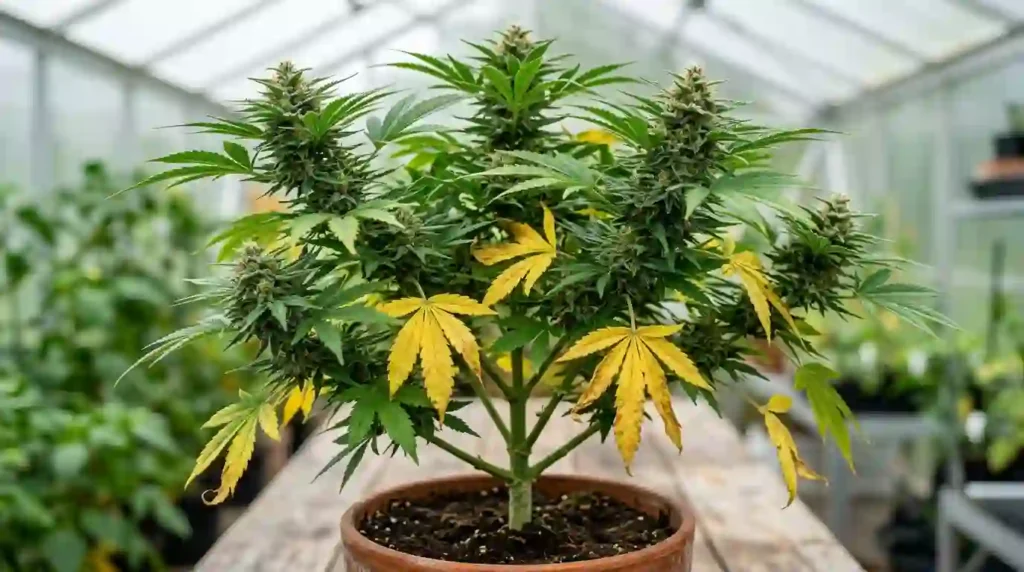
If you have ever looked at your cannabis plant and noticed the leaves going from a healthy, vibrant green to a dull, pale yellow, you are not alone. It is one of the most common concerns among new growers, and honestly, it can be alarming the first time you see it happening. The good news? In most cases, yellowing leaves are a signal your plant is sending you, not a death sentence for it.
This guide is going to walk you through the real reasons why cannabis plants turn yellow, what each cause actually looks like in practice, and what you can do about it. Whether you are just starting out or you have grown a few cycles and keep running into this issue, there is something here for you.
What Yellowing Leaves Are Really Telling You
Think of your cannabis plant like any other leafy plant in your garden, a tomato, a basil bush, or a houseplant. When leaves change color unexpectedly, it usually means one of a handful of things has gone wrong: something is missing, something is in excess, or the environment is off.
Cannabis plants communicate their stress through their leaves. Yellow leaves are often the first visible symptom. The challenge is that many different problems can produce the same yellowing effect, so you have to look at the whole picture, not just the leaf color.
Here is a useful way to approach it. Ask yourself three questions when you notice yellow leaves:
- Where on the plant are the yellow leaves showing up, top, middle, or bottom?
- What does the yellowing actually look like, solid yellow, yellow with green veins, yellow with spots?
- What has changed recently in your growing environment?
Those three questions alone will narrow down the cause significantly.
The Most Common Reasons Cannabis Leaves Turn Yellow
1. Nitrogen Deficiency
This is the single most common cause of yellowing in cannabis plants, and it usually shows up during the vegetative or early flowering stage.
Nitrogen is what gives leaves their green color. It is a core building block of chlorophyll, the pigment that allows plants to turn light into energy. When a plant does not have enough nitrogen available, it starts cannibalizing its older, lower leaves first. The green drains out, and those leaves turn pale yellow, then bright yellow, and eventually drop off.
What to look for: Yellowing that starts at the bottom of the plant and moves upward. The leaves go uniformly yellow, not patchy or spotted. The rest of the plant may still look healthy at first.
What causes it: Underfeeding, using a nutrient solution that is too diluted, incorrect pH levels that lock nitrogen out of the root zone, or soil that has been depleted over time.
One important note here. pH plays a massive role in nutrient availability. Even if nitrogen is present in your growing medium, if the pH of your water or soil is too high or too low, the plant simply cannot absorb it. This is called nutrient lockout, and it is responsible for a huge percentage of deficiency problems growers think are caused by under-fertilizing.
For soil growing, a pH between 6.0 and 7.0 is generally considered the right range. For hydroponic or soilless growing, aim for 5.5 to 6.5. When in doubt, test your pH.
2. Overwatering
Overwatering is probably the second most widespread mistake, especially among beginners. It feels counterintuitive because you are giving the plant more water, which should be good, right? But plants need oxygen at the root level just as much as they need water. When the soil is constantly saturated, roots cannot breathe, they begin to suffocate, and the plant’s ability to take up nutrients shuts down.
The result looks a lot like a nutrient deficiency because in a way, it is. Stressed roots stop absorbing efficiently, so the plant starts showing signs of starvation even though the growing medium may be full of nutrients.
What to look for: Leaves that are yellowing alongside drooping, leaves that curl slightly downward and feel limp and soft rather than crisp. The soil stays wet for days at a time. There may also be a musty or sour smell from the root zone if root rot has set in.
How to avoid it: Water only when the top inch or two of the growing medium has dried out. Lift the pot. If it feels heavy, wait. If it feels noticeably lighter, it is time to water. Good drainage holes and an airy growing medium make a significant difference.
3. Light Burn or Light Stress
Cannabis plants love light, but too much of it, or light that is too intense and too close to the canopy, can cause what growers call light burn. This is heat and intensity stress rather than a nutrient issue, but it produces similar symptoms.
What to look for: Yellowing that appears specifically on the uppermost leaves and bud sites, the parts of the plant closest to the light source. The yellowing often has a bleached or washed-out look. The leaves do not droop, and the rest of the plant may look perfectly fine.
The distinction between light burn and a nutrient deficiency is mostly location. Deficiencies tend to move from the bottom up. Light burn shows up at the top.
What to do: Increase the distance between your light source and the plant canopy. Check the manufacturer’s recommendations for your specific light model. Different light technologies, LED, HPS, and fluorescent, have different optimal distances.
4. Heat Stress
Related to but distinct from light burn, heat stress happens when the ambient temperature around your plant climbs too high. Cannabis generally prefers temperatures between 20 and 28 degrees Celsius during the day. Once you push past that range consistently, the plant starts to struggle.
What to look for: Leaves curling upward at the edges, a kind of taco shape, along with yellowing and sometimes brown scorched tips. Heat stress often combines with low humidity, which compounds the problem.
Improving ventilation, using fans to move air, and monitoring temperature with a thermometer placed at canopy level will help you catch this before it gets serious.
5. Magnesium Deficiency
Magnesium is another key ingredient in chlorophyll production. A magnesium deficiency creates a distinctive look that is worth learning to recognize because it is fairly common, especially in plants being grown in heavily flushed hydroponic systems or in coco coir.
What to look for: Yellowing that starts between the leaf veins. The veins themselves stay green, but the tissue between them turns yellow or lime-colored. This interveinal chlorosis, as it is technically called, is a hallmark of magnesium deficiency and helps distinguish it from nitrogen issues.
A common, gentle fix for mild magnesium deficiency is adding a small amount of Epsom salt (magnesium sulfate) to your watering routine. But again, check your pH first. A pH that is too high will lock out magnesium even if it is present in the medium.
6. Natural Leaf Senescence During Late Flowering
Here is one that trips up a lot of beginners: not all yellowing is a problem.
As a cannabis plant moves into the final weeks of flowering, it naturally begins to redirect its energy toward producing seeds or completing bud development. The lower, older fan leaves start to yellow and die off on their own. This is called senescence, and it is a completely normal part of the plant’s life cycle.
Think of it the same way you would think about a deciduous tree losing its leaves in autumn. The plant is not sick. It is simply allocating its resources where they matter most during the final stretch.
How do you tell the difference? Look at the timing. If your plant is 6 to 8 weeks into a flowering cycle and the lower leaves are yellowing gradually, with the upper plant looking healthy and the buds developing well, this is almost certainly natural aging. If yellowing is appearing rapidly, spreading upward, or affecting new growth, that is when you should investigate further.
7. Root Problems
Healthy roots equal a healthy plant. When roots become damaged, compacted, or infected, the whole plant suffers. Root rot, caused by pythium or other water mold pathogens, is a serious condition that causes rapid yellowing, wilting, and decline.
What to look for: Roots that appear brown or slimy rather than white and firm. A foul smell coming from the root zone. Wilting that does not recover after watering. Rapid, spreading yellowing that does not match a typical deficiency pattern.
Prevention is far easier than treatment. Avoid overwatering, use well-aerated growing media, ensure proper drainage, and consider beneficial bacteria or mycorrhizal additives in your growing medium to support root health.
Quick Summary: Yellowing Causes at a Glance
- Bottom leaves yellowing, moving upward: Likely nitrogen deficiency or overwatering
- Yellowing between veins, veins stay green: Likely magnesium deficiency
- Top leaves yellowing or bleached: Likely light burn
- Leaves curling upward with yellow tips: Likely heat stress
- Widespread wilting and yellowing with foul roots: Likely root rot
- Lower leaves yellowing in late flower: Likely natural senescence
Pro Tips From Experience
After a few growing cycles, certain lessons start to repeat themselves. Here are some of the most important ones.
Test your pH every single time you water. It is the most overlooked variable in cannabis growing, and it causes more nutrient problems than actual nutrient shortages do. A decent pH pen is one of the best investments a new grower can make.
Diagnose before you treat. Beginners often react to yellowing by immediately adding more nutrients. If the actual cause is overwatering, root issues, or pH lockout, adding more nutrients makes the problem worse. Take a breath, look at the whole plant, and work through the possible causes logically before adding anything.
Check one variable at a time. If you change your watering frequency, your nutrient dose, your light distance, and your pH all at once, you will have no idea what actually fixed the problem. Adjust one thing, wait a few days, and observe.
Keep a grow journal. Logging your watering schedule, pH readings, temperatures, and feeding routine sounds tedious, but it is invaluable when something goes wrong. Patterns become obvious in a journal that are invisible when you are trying to remember what you did two weeks ago.
Important Considerations
Growing any plant well requires patience and observation. Cannabis is no different from other garden plants in that regard. It rewards attentive growers and punishes neglect or overreaction equally.
When making decisions about fertilizers, pH adjusters, or growing media, always follow product directions carefully. More is not always better when it comes to plant nutrition. Most commercial nutrient solutions are designed to be diluted and used at specific rates for a reason.
Environmental control is foundational. Temperature, humidity, airflow, and light intensity work together as a system. Fixing one without considering the others often leads to new problems. A basic digital thermometer and hygrometer combination is an inexpensive tool that will give you enormous insight into what your plants are experiencing.
Finally, remember that laws around cannabis cultivation vary enormously depending on where you live. Some jurisdictions permit home cultivation for personal use, others do not. This guide is educational in nature. It is your responsibility to understand and comply with the regulations in your specific location.
Frequently Asked Questions
Why are my cannabis plants turning yellow even though I am feeding them?
This is almost always a pH problem. If the pH of your water or growing medium is outside the optimal range, the plant cannot absorb nutrients even when they are present. Test your pH and adjust before adding more nutrients.
Can yellow leaves turn green again?
Severely yellowed leaves rarely recover their full green color. However, once you fix the underlying cause, new growth will emerge healthy and green. Focus on the health of new growth rather than trying to revive damaged leaves.
Is it normal for cannabis leaves to yellow during flowering?
Yes, to a degree. The lower, older fan leaves naturally yellow and die off during the late flowering stage as the plant redirects energy to bud production. This is normal senescence. Rapid or widespread yellowing spreading to new growth is not normal and should be investigated.
What causes yellow leaves on cannabis plants in soil versus hydroponics?
In soil, pH lockout, overwatering, and nutrient depletion are common culprits. In hydroponic systems, pH drift, nutrient imbalances, and root oxygenation issues tend to be more prevalent. The diagnostic approach is the same, but the solutions differ slightly based on the growing medium.
How do I know if yellow leaves are from too much or too little water?
Overwatered plants tend to have yellowing alongside drooping, soft, limp leaves and soil that stays wet for long periods. Underwatered plants show yellowing alongside wilting with dry, crispy soil. Check the moisture level of your growing medium before drawing conclusions.
Final Thoughts
Yellow leaves on cannabis plants are almost never a mystery once you know what to look for. The plant is telling you something, and with a little observation and patience, you can usually figure out what that something is.
Start with the basics: check your pH, assess your watering habits, observe where the yellowing is occurring on the plant, and consider what has changed recently in your environment. Work through the possibilities methodically rather than reacting in a panic, and you will solve most problems before they become serious.
Cannabis cultivation, like any horticulture, is as much about learning to read your plants as it is about following a set of rules. The more you observe, the more you learn, and the better your results become over time. Take notes, stay curious, and do not be too hard on yourself when things go sideways. Every grower has lost a few leaves along the way.
Disclaimer: This article is for educational and informational purposes only. Cannabis cultivation is regulated differently across countries, states, and regions. Always check and follow the laws applicable to your location before growing any plant. Nothing in this article constitutes legal or medical advice.